Malbek's Innovative Take on Contract Lifecycle Management
Table of Contents
- Understanding Malbek’s Approach to Contract Lifecycle Management
- What Makes Conversational CLM Different
- Core Features Beyond the AI Assistant
- Target Market and Implementation Considerations
- How Bek AI Assistant Actually Works in Practice
- Combining Capabilities and Technical Architecture
- Pricing Structure and Total Cost Considerations
- Common Implementation Challenges and Practical Solutions
- Comparing Malbek to Alternative CLM Approaches
- Bottom Line
- Understanding Malbek’s Approach to Contract Lifecycle Management
- What Makes Conversational CLM Different
- Core Features Beyond the AI Assistant
- Target Market and Implementation Considerations
- How Bek AI Assistant Actually Works in Practice
- Combining Capabilities and Technical Architecture
- Pricing Structure and Total Cost Considerations
- Common Implementation Challenges and Practical Solutions
- Comparing Malbek to Alternative CLM Approaches
- Bottom Line
Understanding Malbek’s Approach to Contract Lifecycle Management
Contract lifecycle management platforms have evolved, but many still rely on traditional interfaces requiring navigation through multiple screens and menus. Malbek, founded in 2019, offers a different approach. Central to the platform is the “Bek AI assistant,” a conversational AI that allows legal professionals to interact with contracts using natural language. With $27 million in funding, Malbek positions itself as a contract management AI solution for mid-market to enterprise organizations. The company’s focus on conversational interfaces marks a shift in how legal teams might interact with contract data and workflows. This review examines whether Malbek’s approach benefits law firms and corporate legal departments handling high-volume contract portfolios.
What Makes Conversational CLM Different
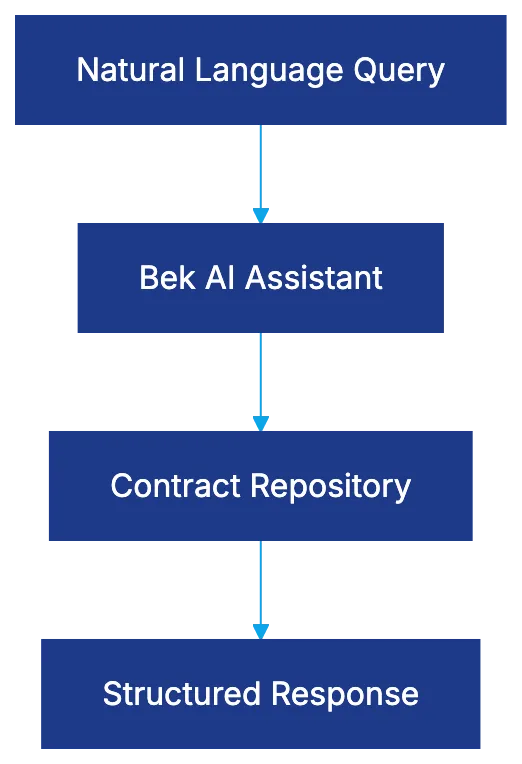
“Conversational CLM” refers to contract management platforms that use natural language processing, enabling users to interact with contract data through chat-like interfaces. Users can make queries such as “Show me all contracts expiring in Q2 with auto-renewal clauses” or “What are our payment obligations under the Smith vendor agreement?” The Bek AI assistant processes these requests, retrieving relevant information from the contract repository.
Conversational CLM Architecture:
This approach addresses real pain points in traditional systems. Legal professionals often know the information needed but struggle to extract it. Query builders and filter menus require understanding of the system’s data structure. In contrast, conversational interfaces allow plain language queries.
However, effectiveness hinges on the AI’s ability to understand context, manage phrasing variations, and access the correct data. Firms evaluating Malbek must consider whether Bek can handle complex contract language and legal terminology.
Core Features Beyond the AI Assistant
While the Bek AI assistant is Malbek’s differentiator, the platform includes standard features expected by legal teams. The contract authoring module supports template libraries and clause banks for assembling agreements from pre-approved language, valuable for procurement teams managing high volumes of agreements.
Workflow automation manages approval routing based on contract value, risk level, and parameters. This automation can trigger notifications to stakeholders, escalate to senior counsel, or pause for compliance review, reducing manual coordination but requiring upfront configuration.
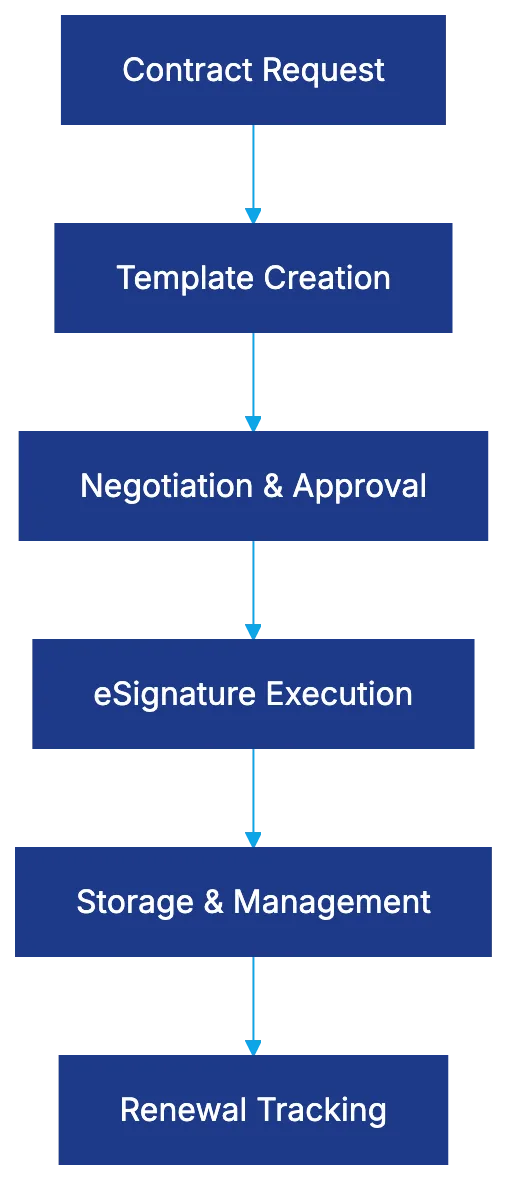
Contract Lifecycle Management Flow:

The analytics module tracks metrics, renewal dates, and deadlines, with standard reports covering use cases like cycle time and vendor spending patterns. The central repository provides version control and audit trails. Notably, the Bek AI assistant integrates with these features, not as an add-on but as a functional aspect of the entire platform.
Target Market and Implementation Considerations
Malbek targets mid-market to enterprise organizations, especially those managing hundreds to thousands of contracts annually but lacking Fortune 500 resources. For mid-market departments, the appeal lies in maximizing existing resources. Setup involves migrating contracts into Malbek’s repository, configuring templates and workflows, and training the AI. Success depends on data quality, as contracts stored as PDFs require OCR processing, and inconsistent metadata needs cleanup.
For law firms versus corporate legal departments, Malbek’s structure suits in-house teams managing their contracts rather than those handling multiple clients.
How Bek AI Assistant Actually Works in Practice
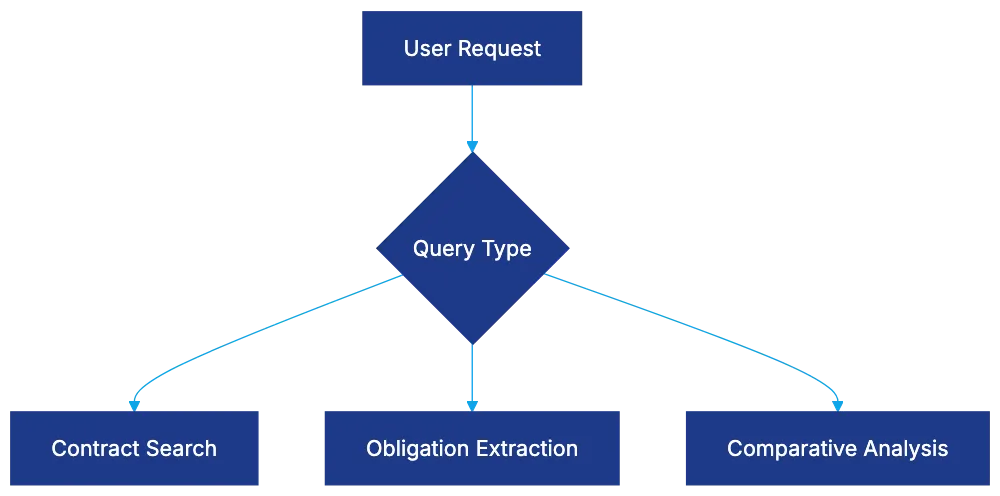
Based on Malbek’s documentation, Bek handles requests in several categories. Contract search queries allow users to find agreements based on parties, terms, obligations, or clauses without remembering exact filing conventions. Obligation extraction prevents missed renewals by pulling deadlines, deliverables, and commitments.
Contract drafting involves complexity in AI use. A user might ask Bek to “draft a standard consulting agreement with a 90-day termination clause and IP assignment provisions,” pulling the template, inserting clauses, and presenting for review, effective for routine agreements but requiring oversight for non-standard ones.
Comparative analysis is another use case. Legal teams negotiating vendor contracts often want to know accepted terms with similar vendors. Queries like “compare payment terms in our top five software vendor agreements” inform strategies. AI accuracy in identifying relevant provisions determines value.
While conversational AI can retrieve language and identify patterns, it doesn’t provide legal advice. Professionals must review Bek’s responses with scrutiny.
Combining Capabilities and Technical Architecture
Malbek offers integrations with common tools like Salesforce, Microsoft Office, DocuSign, and ERP systems. These integrations are crucial as contract data relevance spans departments. Sales teams need visibility into terms, finance needs values, and procurement needs vendor details. API availability allows custom integrations for specific requirements.
Security is relevant, with contract repositories containing sensitive information. Malbek’s cloud-based architecture provides controls, encryption, and audit logging. Regulatory compliance for firms in industries like healthcare might influence suitability.
Bek AI Assistant Capabilities:
Pricing Structure and Total Cost Considerations
Malbek uses custom enterprise pricing, standard for mid-market to enterprise platforms. Pricing factors include users, volume, storage, and modules. Total cost of ownership includes setup fees for migration, configuration, and training. Costs include support, updates, storage, and potential charges for API calls.
ROI calculations should include time savings from automation and risk reduction from obligation tracking. Reduction in cycle time by 30% or prevention of missed renewals can justify investment. Advanced AI capabilities might demand premium pricing, impacting cost structure.
Common Implementation Challenges and Practical Solutions
Organizations implementing Malbek face challenges like data migration. Contracts in inconsistent formats or missing metadata require cleanup. Prioritizing active agreements and templates first, with historical contracts backfilled, is practical.
User adoption is another hurdle. Professionals may resist changes, requiring staged rollouts and use case-focused training. AI accuracy issues will arise; organizations need processes to report and correct errors, improving accuracy over time.
Integration complexity can exceed estimates. Connecting Malbek to existing systems requires custom development and data mapping. Building buffer time and identifying resources mitigate derailment.
Comparing Malbek to Alternative CLM Approaches
The market includes numerous alternatives from established vendors to new AI-focused startups. Malbek’s AI differentiates it from traditional platforms. Conversational AI adds value with frequent ad-hoc analysis across agreements. For firms with structured workflows, traditional platforms may offer adequate functionality.
Point solutions for specific tasks are another option but can create integration challenges. Malbek’s integrated approach consolidates functionality, though it may not exceed every component compared to specialized alternatives.
Bottom Line
Malbek’s conversational CLM approach addresses inefficiencies in data interaction. The Bek AI assistant offers potential to reduce time on agreement search, obligation extraction, or term comparison. For mid-market departments managing contract volumes without headcount increases, these gains can provide value.
However, platform suitability varies. Organizations with standardized processes may not need conversational AI. The technology is effective with regular ad-hoc contract analysis or inquiries about terms. Success requires clean data, realistic AI expectations, and commitment to improvement.
Custom pricing requires engagement with Malbek’s sales for budget fit. Evaluation should focus on total ownership costs, including setup and support, not just licensing. Conversational AI is promising but needs careful evaluation against specific needs and workflows.
Frequently Asked Questions
What organizations benefit most from using Malbek?
Malbek primarily targets mid-market to enterprise organizations that manage large volumes of contracts annually. Its features are particularly appealing to in-house legal teams that require efficient contract management but may lack extensive resources typical of larger corporations.
How does the Bek AI assistant enhance contract management?
The Bek AI assistant allows users to interact with contracts using natural language queries, simplifying the process of retrieving necessary information. This AI-driven interface helps legal professionals quickly find relevant data such as contract obligations and renewal dates without navigating complex menus.
What are the implementation challenges associated with Malbek?
Common challenges include data migration from inconsistent formats, user adoption resistance, and integration complexities with existing systems. Organizations may need to prioritize active contracts for initial setup and provide comprehensive training to ease the transition for users.
How important is data quality for the effectiveness of Malbek?
Data quality is crucial for Malbek's effectiveness, as the platform relies on accurate and well-structured information. Poorly formatted contracts or inconsistent metadata can lead to challenges in AI accuracy and overall system performance.
What types of integrations does Malbek support?
Malbek supports integrations with popular tools such as Salesforce, Microsoft Office, DocuSign, and various ERP systems. These integrations are vital for ensuring that contract data can be accessed and utilized across different departments within an organization.
How is Malbek's pricing structured?
Malbek utilizes a custom enterprise pricing model that varies based on factors such as the number of users, contract volume, and specific modules used. Organizations should consider the total cost of ownership, including setup, training, and ongoing support, when evaluating their budget.
Can Malbek's AI assistant provide legal advice?
No, the Bek AI assistant does not provide legal advice; it assists in retrieving and analyzing contract-related information. Legal professionals are still required to review the AI's responses critically, ensuring compliance and accuracy in their decision-making processes.
Related Articles
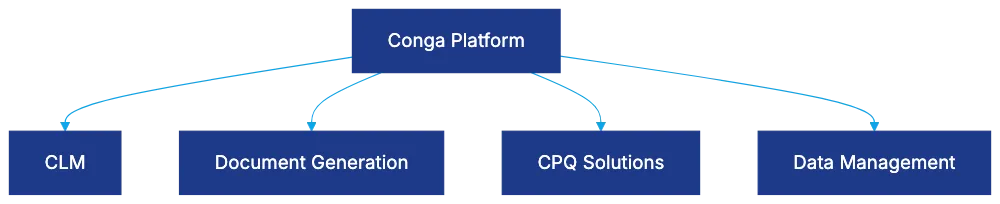
Conga: Revolutionizing Legal Technology for Professionals
Discover how Conga streamlines contract management and document generation for legal teams using Salesforce.
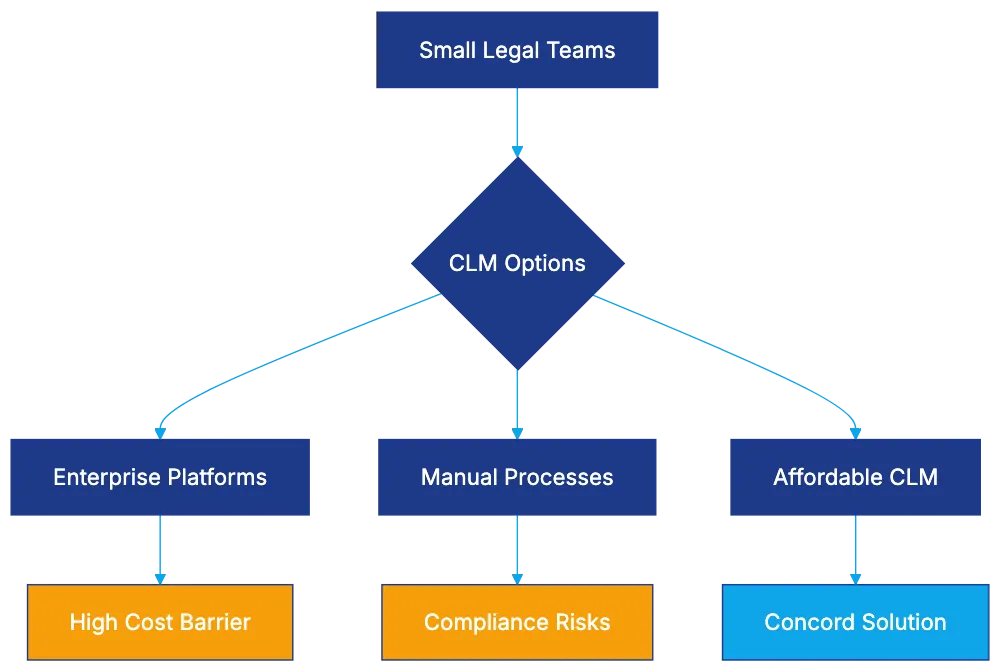
Addressing Contract Management for Small Legal Teams
Explore how Concord CLM bridges the gap for small legal teams with affordable solutions and AI capabilities.
DocuSign CLM: Streamlining Contract Management
Discover how DocuSign CLM enhances contract management with seamless e-signature integration and powerful automation features.