LEGALFLY: Revolutionizing European Legal AI Tools
Table of Contents
- The European Legal AI Gap
- Default Document Anonymization
- LLM-Agnostic Architecture and Agentic Capabilities
- GDPR Compliance as Foundational Design
- Practical Applications for In-House Legal Teams
- Competitive Positioning Against US-Based Alternatives
- Implementation Considerations and Limitations
- The GDPR-First Future of Legal AI
- Bottom Line
- The European Legal AI Gap
- Default Document Anonymization
- LLM-Agnostic Architecture and Agentic Capabilities
- GDPR Compliance as Foundational Design
- Practical Applications for In-House Legal Teams
- Competitive Positioning Against US-Based Alternatives
- Implementation Considerations and Limitations
- The GDPR-First Future of Legal AI
- Bottom Line
Introduction
In-house legal teams across Europe face challenges adopting European legal AI tools as US-based platforms often overlook GDPR compliance. LEGALFLY, a Belgian legal AI platform founded in 2023, caters specifically to this need. Built with European data protection at its core, LEGALFLY offers default document anonymization and LLM-agnostic technology for enterprises under strict privacy rules. This review evaluates how LEGALFLY’s European-first approach impacts in-house legal AI teams.
The European Legal AI Gap
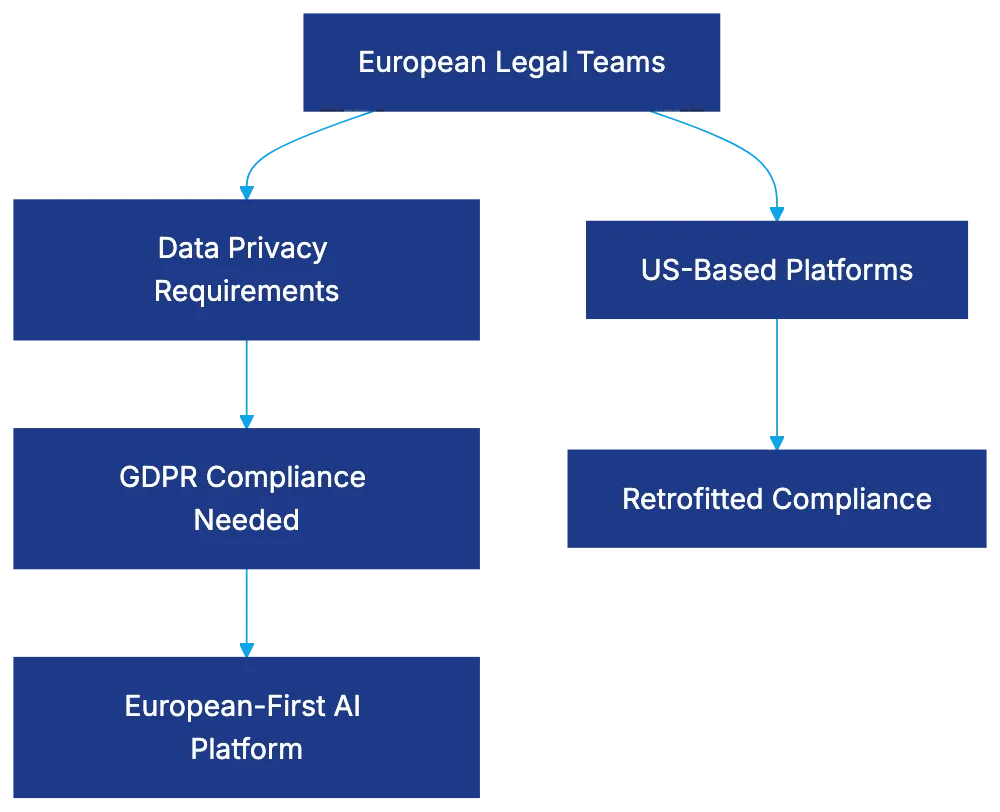
European Legal AI Landscape:
The Belgium legal tech market is dominated by US companies, leaving a mismatch for European legal departments. US platforms retrofitting GDPR compliance post-launch presents issues for European users. LEGALFLY fills this gap by treating GDPR as a baseline, addressing European enterprises’ need for strong legal AI without data protection compromises.
European legal departments face increased pressure for contract automation and AI-driven document analysis yet hesitate due to data residency concerns. A platform built for this market fulfills a crucial need.
Default Document Anonymization
LEGALFLY offers automatic document anonymization—no configuration is needed. Upon upload, names, addresses, and financial details are removed, preserving legal substance while ensuring privacy. This ensures compliant AI contract analysis, as opposed to platforms requiring manual redaction, reducing human error and aiding teams with high document volumes.
Document Anonymization Process:

LLM-Agnostic Architecture and Agentic Capabilities
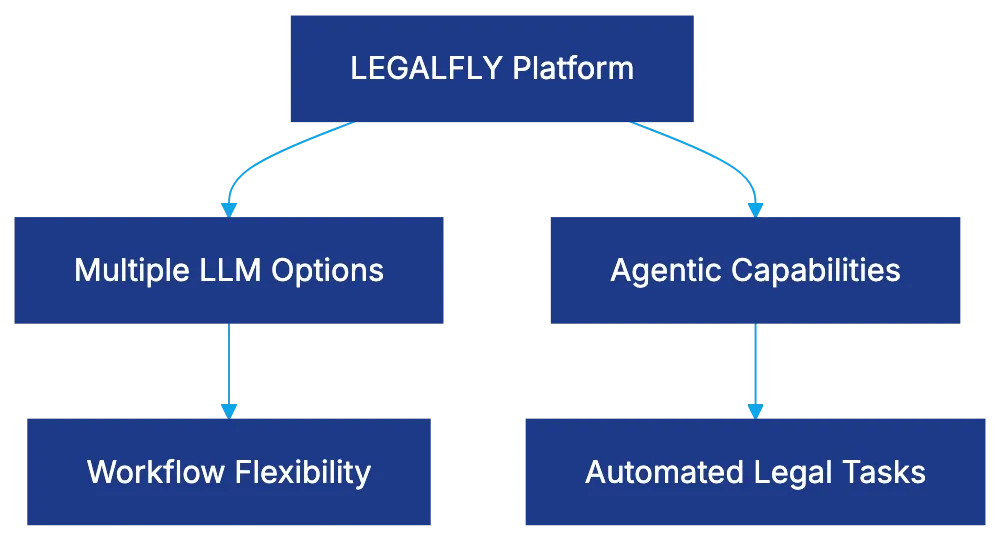
LEGALFLY’s LLM-agnostic platform works with multiple language models, offering workflow flexibility. The platform’s agentic legal AI moves beyond simple exchanges to comprehensive legal workflows, allowing in-house teams to automate routine contract reviews and extract key terms without manual prompting.
LLM-Agnostic Architecture:
GDPR Compliance as Foundational Design
LEGALFLY’s architecture is built on European privacy principles. European data residency is standard, and data processing agreements align with EU expectations, streamlining compliance evaluations. This shifts from reactive measures to integrated GDPR compliance.
Practical Applications for In-House Legal Teams
Contract automation is LEGALFLY’s main use. Legal departments can manage standard agreements, ensuring regulatory compliance. Its analysis capabilities help track compliance documentation across complex regulations. For vendor management, LEGALFLY standardizes contractual obligations into queryable data.
Competitive Positioning Against US-Based Alternatives
Compared to US platforms like LexisNexis CounselLink, LEGALFLY emphasizes alignment with European legal practices. LEGALFLY’s automatic document anonymization and European-focused pricing offer benefits US-based tools can’t without additional configuration, reducing operational overhead.
Implementation Considerations and Limitations
LEGALFLY’s European focus may not suit global teams with substantial US operations. Its newness in the market lacks peer validation and operational experience compared to established vendors. Consistency in AI outputs could be affected by multiple LLMs, complicating tasks.
The GDPR-First Future of Legal AI
LEGALFLY represents a shift in legal technology Europe. There’s a growing demand for platforms with GDPR at their core. As European legal tech companies shift focus, they create specialist tools that cater to local markets well. Agentic legal AI and built-in anonymization set LEGALFLY apart, suggesting these features will become standard under increased scrutiny.
Bottom Line
LEGALFLY fills a gap for European in-house legal teams needing AI tools that prioritize regulatory environments. Its features like default document anonymization and GDPR-focused architecture are valuable for EU-based enterprises. It may not fit global organizations with significant non-European operations, but for mid-sized European companies, LEGALFLY offers a practical, context-aware package. As it evolves, LEGALFLY could become a viable European alternative to US-centric tools.
Frequently Asked Questions
What makes LEGALFLY different from other legal AI tools?
LEGALFLY is specifically designed for European legal environments, prioritizing GDPR compliance from the outset. Unlike US-based platforms that often retrofit compliance features, LEGALFLY incorporates privacy protections like automatic document anonymization as a standard feature.
How does the document anonymization feature work?
Upon uploading documents to LEGALFLY, personal information such as names, addresses, and financial details are automatically removed. This process ensures that the legal content remains intact while safeguarding sensitive data, significantly reducing the risk of human error during manual redaction.
Can LEGALFLY be used for teams outside of Europe?
While LEGALFLY is primarily designed for European in-house legal teams, its focus on GDPR compliance may limit its applicability for organizations with substantial operations in other regions, such as the US. Companies with a global presence might find it less suited to their diverse compliance needs.
What are the practical applications of LEGALFLY for legal teams?
LEGALFLY excels in contract automation, enabling legal departments to efficiently manage standard agreements while ensuring compliance with EU regulations. Its capabilities extend to tracking compliance documentation and standardizing vendor management contracts into easily queryable data.
Is there any risk associated with using multiple LLMs on LEGALFLY?
Yes, using multiple LLMs could lead to inconsistencies in AI outputs, which may complicate legal tasks. This variation might affect the reliability of contract reviews and term extractions, making it essential for users to monitor the AI's performance closely.
How does LEGALFLY cost compare to US-based legal AI tools?
LEGALFLY offers European-focused pricing that reflects its alignment with local legal practices. This model may present cost advantages over US platforms, particularly since LEGALFLY’s features, such as automatic document anonymization, require no additional configuration, potentially reducing overall operational costs.
What should I consider before implementing LEGALFLY in my organization?
Before implementation, consider whether your organization primarily operates within the EU, as LEGALFLY is tailored for European regulatory environments. Additionally, assess if your team can adapt to the new platform's functionalities and whether its current market experience aligns with your organization's needs.
Related Articles
Conga: Revolutionizing Legal Technology for Professionals
Discover how Conga streamlines contract management and document generation for legal teams using Salesforce.
Malbek's Innovative Take on Contract Lifecycle Management
Explore how Malbek's conversational AI transforms contract lifecycle management for legal teams in mid-market and enterprise organizations.
Summize: Revolutionizing Contract Management in Teams
Discover how Summize enhances contract management through Microsoft Teams with AI-driven solutions and seamless integration.